
Understanding the Ground Before Construction Begins
A strong building begins with a strong foundation. But before designing and constructing a foundation, it is essential to understand the ground on which the structure will stand.
At Smart Engineering, Soil Testing is an important part of our pre-design and engineering process. A proper soil investigation provides valuable information about the subsurface conditions of a construction site and helps engineers determine appropriate foundation and structural solutions.
Whether you are planning an industrial factory, steel building, warehouse, commercial facility, production plant or other construction project, understanding the soil condition is an essential step toward safe and reliable construction.
What Is Soil Testing?
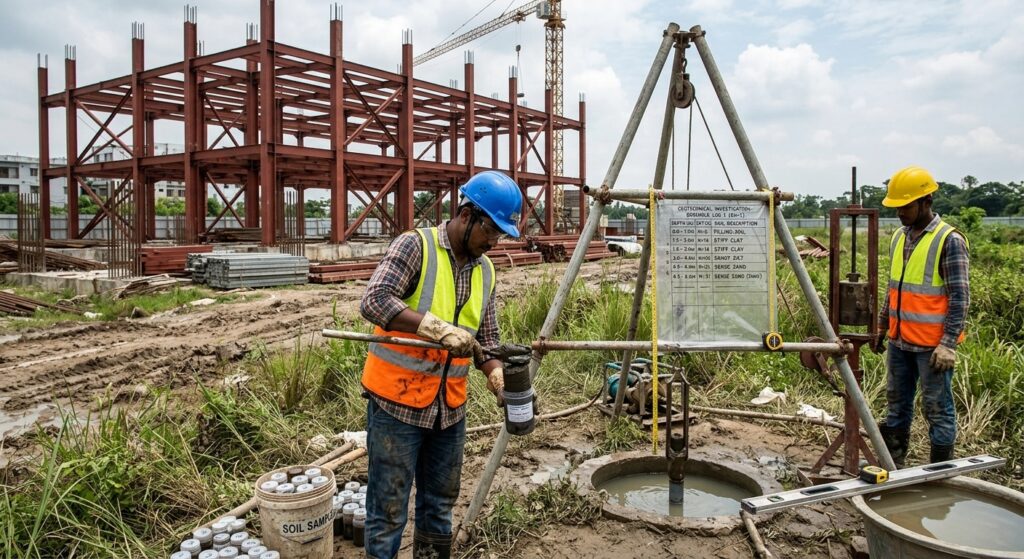
Soil testing, also known as geotechnical investigation, is the process of examining the physical and engineering properties of soil beneath a construction site.
The objective is to determine how the ground is likely to behave under the loads imposed by the proposed structure.
A soil investigation may provide information about:
- Different soil layers and their depths
- Soil type and characteristics
- Bearing capacity
- Soil density and strength
- Groundwater conditions
- Settlement characteristics
- Subsurface conditions
- Suitability of the site for the proposed structure
The results provide engineers with important information for foundation design and other construction decisions.
Why Soil Testing Is Important
The foundation transfers the weight of a building to the ground. If the soil conditions are not properly understood, selecting an inappropriate foundation system can create serious technical and financial problems.
Proper soil investigation helps engineers make informed decisions regarding:
Foundation Type → Foundation Depth → Structural Design → Construction Method
It can also help identify potentially problematic ground conditions before construction begins.
Soil Investigation for Different Projects
Different buildings impose different loads on the ground.
A small commercial building, a multi-storey structure, a warehouse and a heavy industrial facility may require very different foundation solutions.
For industrial and steel-building projects, additional consideration may be required for:
- Heavy structural loads
- Machinery foundations
- Crane loads
- Storage loads
- Production equipment
- Vibrations
- Large column loads
- Future expansion
Therefore, the soil investigation should be considered in relation to the actual purpose and loading requirements of the proposed project.
What Does a Soil Investigation Examine?
Depending on the project requirements and site conditions, a geotechnical investigation may examine several important characteristics of the ground.
Soil Profile
Understanding the sequence and thickness of soil layers helps engineers assess how the ground may respond to the proposed structure.
Bearing Capacity
The investigation helps determine the ability of the soil to support structural loads without unacceptable failure or settlement.
Groundwater
Groundwater conditions can influence excavation, foundation construction, drainage and other aspects of project development.
Settlement
Different soils can behave differently under structural loads. Understanding potential settlement is important when developing an appropriate foundation solution.
Soil Strength
Soil strength characteristics help engineers evaluate the stability and load-bearing behavior of the ground.
Field Investigation
Soil testing generally begins with field investigation at selected locations across the proposed construction site.
Depending on the project, appropriate investigation methods and equipment may be used to obtain subsurface information and soil samples.
The number, location and depth of investigation points should be determined according to the size, type and complexity of the proposed project and the relevant engineering requirements.
The purpose is to develop a representative understanding of the subsurface conditions rather than relying on assumptions based only on surface observations.
Laboratory Testing
Where required, collected soil samples can be examined through laboratory testing.
Laboratory tests may be used to determine relevant physical and engineering properties of the soil.
The results can help engineers evaluate:
- Soil classification
- Moisture characteristics
- Density
- Grain-size distribution
- Strength-related properties
- Compressibility
- Other project-specific engineering parameters
The specific tests required depend on the nature of the site and the proposed construction.
Foundation Design Support
One of the most important applications of soil investigation is supporting foundation design.
Based on the geotechnical findings and structural requirements, engineers can evaluate appropriate foundation options.
Depending on the project and ground conditions, solutions may include different types of shallow or deep foundation systems.
The appropriate foundation should always be determined through proper engineering analysis rather than selecting a foundation type based solely on the building type or previous projects.
Reducing Construction Risk
Soil conditions are not always visible from the surface.
Two nearby sites can have significantly different subsurface conditions. Even within a single project site, soil properties may vary.
A proper soil investigation helps identify these variations and reduces the uncertainty associated with foundation design and construction.
It can help prevent costly problems such as:
- Unexpected ground conditions
- Inappropriate foundation selection
- Excessive settlement
- Foundation-related redesign
- Construction delays
- Unplanned ground improvement
- Additional construction costs
Early investigation is generally much more efficient than discovering major ground-related problems after construction has started.
Soil Testing and Cost Planning
Soil conditions can influence the overall construction cost.
Foundation depth, foundation type, excavation requirements, ground improvement, dewatering and other construction requirements may be affected by the results of the geotechnical investigation.
For this reason, soil testing can contribute to more informed project planning and cost estimation.
It provides the project team with better information before major construction decisions are finalized.
Soil Testing for Steel Building Projects
Steel buildings are often associated with large structural spans, significant column loads and industrial applications.
Although steel structures can be lighter than some conventional building systems, the foundation still needs to safely transfer the building loads to the ground.
For steel buildings, the soil investigation can therefore support decisions related to:
- Column foundation design
- Foundation depth
- Bearing capacity
- Settlement considerations
- Anchor and base arrangements
- Heavy equipment areas
- Crane-related loads
- Industrial floor requirements
- Future expansion
The final foundation solution should be based on the structural design together with the actual geotechnical conditions of the site.
A Scientific Approach to Construction
At Smart Engineering, we believe construction decisions should be based on reliable information and sound engineering principles.
Soil testing provides an essential link between the physical ground conditions and the engineering design of the proposed building.
Our approach integrates site investigation with the broader project development process:
Client Consultation → Digital Survey → Soil Investigation → Conceptual Planning → Design → Estimation → Construction
This systematic process helps establish a stronger technical foundation for the project before construction begins.
Building with Confidence
A building may be visible above the ground, but its long-term stability depends heavily on what lies beneath it.
Proper soil investigation gives engineers a better understanding of the ground and supports the development of an appropriate foundation solution.
At Smart Engineering, we recognize soil testing as an important part of responsible construction planning. By understanding the site before construction, we help our clients make better engineering decisions and reduce avoidable project risks.
Know the Ground. Design with Confidence. Build for the Future.
Planning a new factory, steel building, warehouse, commercial facility or industrial project?
Start with the ground beneath it.
Contact Smart Engineering to discuss your soil investigation, engineering and construction requirements.
Smart Engineering
Strong Foundations. Smarter Engineering. Reliable Construction.
